
Mandela Patrick
Harvard / Oxford / Researcher @ Facebook London
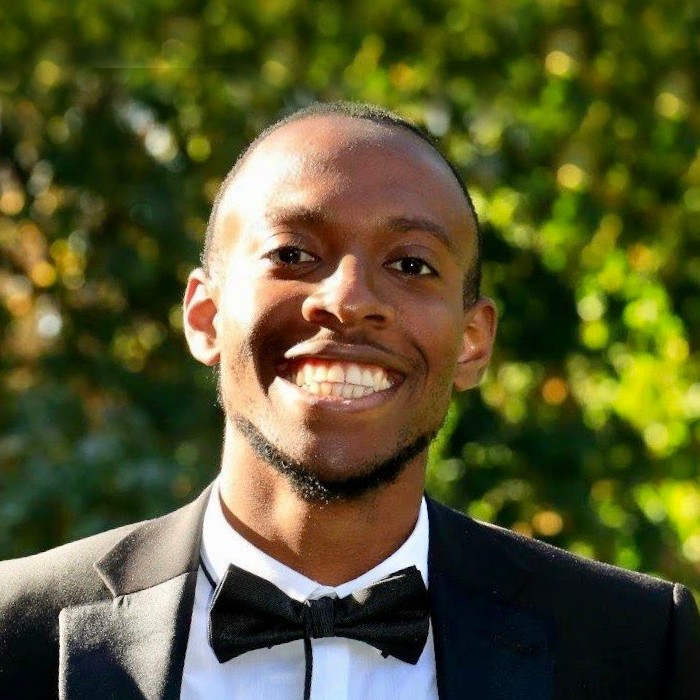
Mandela Patrick
Harvard / Oxford / Researcher @ Facebook London
Mandela is a Rhodes Scholar, second-year PhD student at Oxford University in Visual Geometry Group (VGG) group and student researcher at Facebook AI Research London. In the VGG group, he's researching how to develop AI algorithms for multi-modal video understanding. He graduated from Harvard College in 2018 with a bachelor's degree in Computer Science. He interned as a Software Engineer at Facebook, Goldman Sachs, and Instagram. Hailing from the Caribbean island of Trinidad and Tobago, he is passionate about growing the Caribbean entrepreneurial, AI and startup communities.
Naila Murray
Princeton / Barcelona Uni / Director of Science @ NAVER LABS
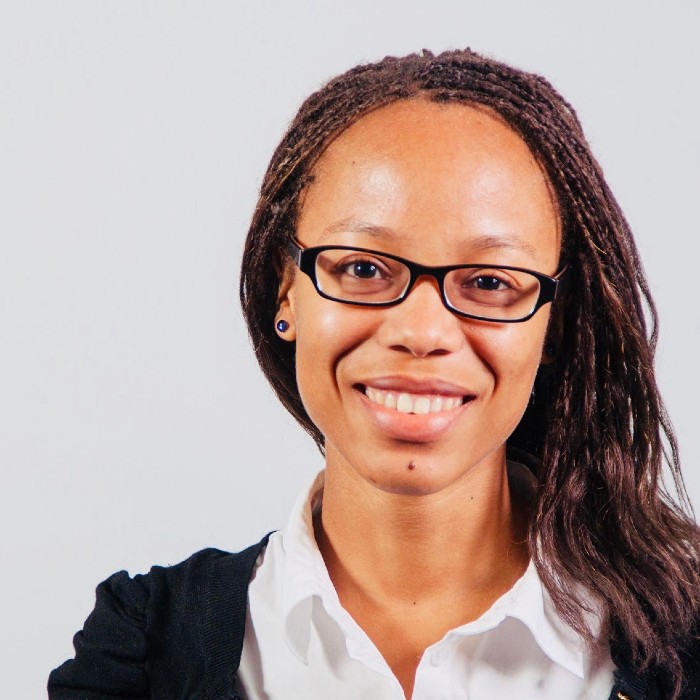
Naila Murray
Princeton / Barcelona Uni / Director of Science @ NAVER LABS
Naila Murray obtained a B.Sc. in Electrical Engineering from Princeton University in 2007. In 2012, she received her PhD from the Universitat Autonoma de Barcelona, in affiliation with the Computer Vision Center. She joined NAVER LABS Europe (then Xerox Research Centre Europe) in January 2013, working on topics including fine-grained visual categorization, image retrieval, and visual attention. From 2015 to 2019 she led the computer vision team at NLE. She currently serves as NLE's director of science. She serves /served as area chair for ICLR 2018, ICCV 2019, ICLR 2019, CVPR 2020, ECCV 2020, and programme chair for ICLR 2021. Her research interests include representation learning and multi-modal search.
Nicholas Fuller
Morehouse / Columbia / Director of Hybrid Cloud Services @ IBM
Nicholas Fuller
Morehouse / Columbia / Director of Hybrid Cloud Services @ IBM
Dr. Nick Fuller is Director of the Global Hybrid Cloud Services organization at IBM Research. In this role, Nick leads a global team of 80 Research professionals and is responsible for providing innovation for and at the intersection of IBM’s Services and Cloud and Cognitive Software portfolios. These innovations span multiple domains in IT Service Management, including: the movement and modernization of legacy workloads to hybrid multicloud environments, Watson-based AIOps and compliance management for hybrid multicloud workloads, and AI-based capabilities for technology support services.
Nick obtained his Bachelor of Science degree in Physics and Math in1997 from Morehouse College and his PhD in Applied Physics from Columbia University in 2002. In the 17+ years that he has been at IBM Research, he has held multiple technical, leadership and client facing roles working in partnership with various IBM product units and clients. Some key accomplishments during this time include: achieving over ½ $B in innovation-led savings for IBM’s Global Technology Services business over a 3-year period, developing foundational capabilities for IBM’s Cloud business and delivering semiconductor innovation for 5 successive generations of CMOS devices for IBM’s Systems business and OEM Clients.
Nick is an IBM Master Inventor, is the holder of 70+ patents, and has co-authored 75 technical publications. He lives in Long Island, New York with his wife and two sons and in his spare time loves playing soccer, listening to music and writing. To this latter end, he penned his memoirs entitled “Struggle and Progress”. This memoir is a ten-year endeavor detailing his struggle from youth to early adulthood with the absence of his biological father and exposure to crime in his community. Coupled with the lifelong progress he made by combining his passion for science and discovery with the unparalleled support he received from his mother, other pivotal role models and peers.
Danielle Belgrave
LSE / UCL / Manchester / Principal Researcher @ Microsoft Cambridge
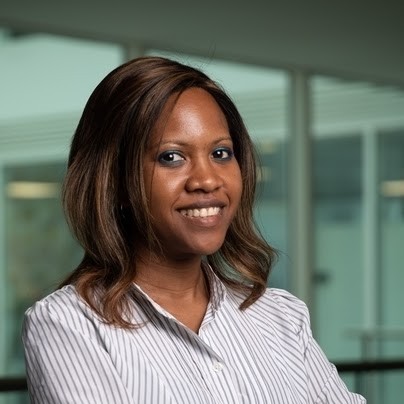
Danielle Belgrave
LSE / UCL / Manchester / Principal Researcher @ Microsoft Cambridge
Dr Danielle Belgrave is a machine learning researcher in the Healthcare Intelligence group at Microsoft Research, in Cambridge (UK) where she leads Project Talia which explores how a human-centric approach to machine learning can meaningfully assist in the detection, diagnosis, monitoring, and treatment of mental health conditions. Her research focuses on integrating medical domain knowledge, probabilistic graphical modelling and causal modelling frameworks to help develop personalized treatment and intervention strategies for healthcare. She obtained a BSc in Mathematics and Statistics from London School of Economics, an MSc in Statistics from University College London and a PhD in the area of machine learning in health applications from the University of Manchester. Prior to joining Microsoft, she was a tenured Research Fellow at Imperial College London.
Stefan Hosein
UWI / Cambridge / ML Engineer @ Google London

Stefan Hosein
UWI / Cambridge / ML Engineer @ Google London
Stefan Hosein is an AI engineer at Google working in the Cloud team. Previously, he attended Cambridge University where he read for a Masters in Philosophy in the Computer Science department specializing in Natural Language Processing. Before this, he did research at UWI where he graduated with a Computer Science degree and went on to intern as a Data Scientist at NASA.
Timothy Hospedales
Cambridge / Edinburgh / Principal Scientist @ Samsung AI Research and Associate Professor @ Edinburgh
Timothy Hospedales
Cambridge / Edinburgh / Principal Scientist @ Samsung AI Research and Associate Professor @ Edinburgh
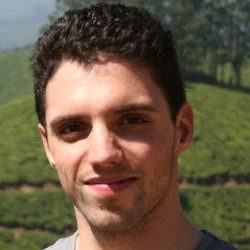
Professional Bio: Timothy Hospedales is a full Professor at University of Edinburgh, where he leads the Machine Intelligence Group; Principal Scientist at Samsung AI Research Centre, Cambridge, where he heads the machine learning and data intelligence group; and Alan Turing Institute Fellow. He is an Associate Editor of PAMI, and has served as Area Chair of several major venues including CVPR, ICCV, ECCV, AAAI, IJCAI, and program chair of BMVC 2018. His research interests include data efficient machine learning and generalisation especially via meta-learning and neuro-symbolic approaches, with applications in computer vision, natural language, robot control and beyond. He has published numerous papers on few-shot learning, multi-task learning, domain adaptation, domain generalisation, meta-learning, and so on; and co-organized tutorials at ACM Multimedia and ECCV. His work has won prizes or nominations at events including ICML, BMVC, ICPR and ICML AutoML and been reported in media such as BBC News and New Scientist.
T&T Bio: Timothy grew up in St Anns, Port of Spain, and graduated from St Mary’s College in 1999 with A-levels in Maths, Further Maths and Physics before studying Computer Science at the University of Cambridge.
Kwame Johnson
Morehouse / Duke / Product Manager @ Clinical, formerly at Google
Kwame Johnson
Morehouse / Duke / Product Manager @ Clinical, formerly at Google
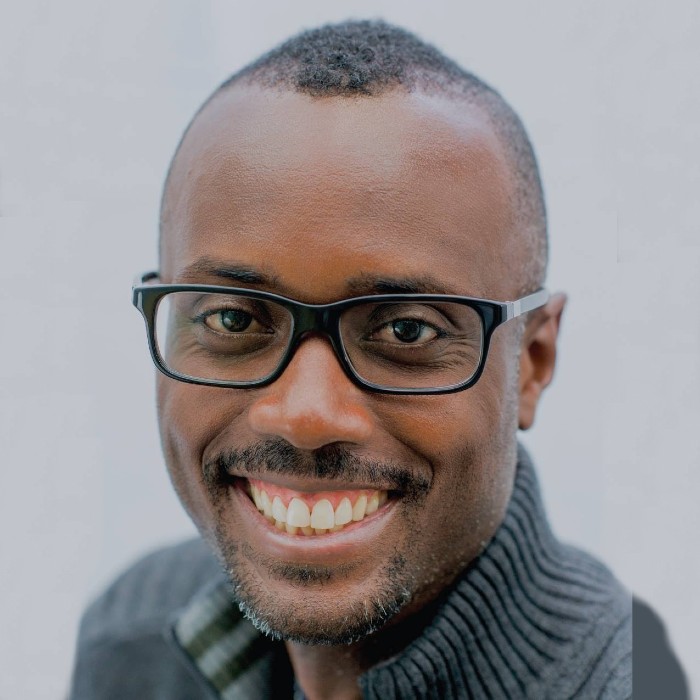
Dr. Kwame Johnson, who was born and raised in Trinidad and Tobago, currently works at the intersection of medicine, AI, and technology in Silicon Valley. He is currently the Lead Product Manager for healthcare provider-facing technology solutions at AliveCor, which was named No.1 Artificial Intelligence Company in Fast Company’s 2018 Most Innovative Companies Ranking. In this role, he leads the development of the next generation of clinical software solutions to solve the most pressing problems healthcare providers face in caring for patients with cardiovascular disease.
Previously, he was a Product Manager at Google Health, where he leveraged the very best technology to build software tools to help move the entire healthcare industry towards the Triple Aim of Healthcare: 1) improved experience of healthcare for patients and providers; 2) improved population health outcomes; and 3) reduced per capita cost of healthcare delivery.
At Google, Dr. Johnson led a team that built the world's first prototype of Google-powered semantic medical search for a mobile phone app used by doctors in the NHS in London, making any piece of relevant patient data instantly accessible and actionable.
He is an expert in the latest advancements in mobile health technologies, artificial intelligence, clinical workflow optimization, medical software implementation, and applied biomedical research. His experience working with cross-functional teams of software engineers, UX researchers, UX designers, data scientists, healthcare strategists, and C-suite executives gives him a unique perspective on how to push the boundaries of what's possible in medicine.
He is an extremely passionate advocate of the power of technology to reduce the burden of disease for patients. Dr. Johnson attended Presentation College, San Fernando before earning degrees from Morehouse College and Duke University School of Medicine in the USA. He enjoys football, mountain biking, hiking, travel, intentional life design, and inspiring everyone to embrace technology to improve all aspects of our everyday lives.
Mark Moyou
Data Science Manager @ LucidWorks

Mark Moyou
Data Science Manager @ LucidWorks
Dr. Mark Moyou is a Data Science Manager in the Professional Services division at Lucidworks. He is responsible for all production level AI implementations. Prior to Lucidworks, he was a Data Scientist at Alstom Transportation where he applied Data Science to the Railroad Industry. Mark holds a PhD in Systems Engineering where his machine learning research focused on 2D and 3D Geometric shape matching and retrieval, object detection in video streams, anomaly detection in IP stream data and concrete crack detection of bridge structures.
11:00am - 11:45am
Lecture 1: Introduction to Deep Learning
Mandela Patrick
Topics: Image Classification Problem, Shallow Classifier: k-NN Classifier, Cross-Validation
11:45am - 12:00pm
Naila Murray Q&A (Director at Naver Labs)
Naila Murray
12:00pm - 1:00pm
Coding Exercises
E0: Python and Numpy Walkthrough
E1: k-Nearest Neighbor classifier
11:00am - 11:45am
Deep Sequence Modeling
Mandela Patrick
Lecture
Topics: Linear Classifiers: SVM and Softmax Classifier, Loss functions, L1/ L2 Regularization, Introduction to Optimization (SGD)
11:45am - 12:00pm
Nicholas Fuller Q&A (Director at IBM Research)
Nicholas Fuller
12:00pm - 1pm: Coding Exercises
Coding Exercises
E2: Support Vector Machine
E3: Softmax classifier
E4: Higher Level Representations: Image Features (HW)
11:00am - 11:45am
Deep Computer Vision
Mandela Patrick
Topic: BackPropagation, MLPs
11:45am - 12:00pm
Danielle Belgrave Q&A (AI Researcher at Microsoft Research)
Danielle Belgrave
12:00pm - 1:00pm
Coding Exercises
E5: Two-Layer Neural Network
E6: Fully-connected Neural Network (HW)